
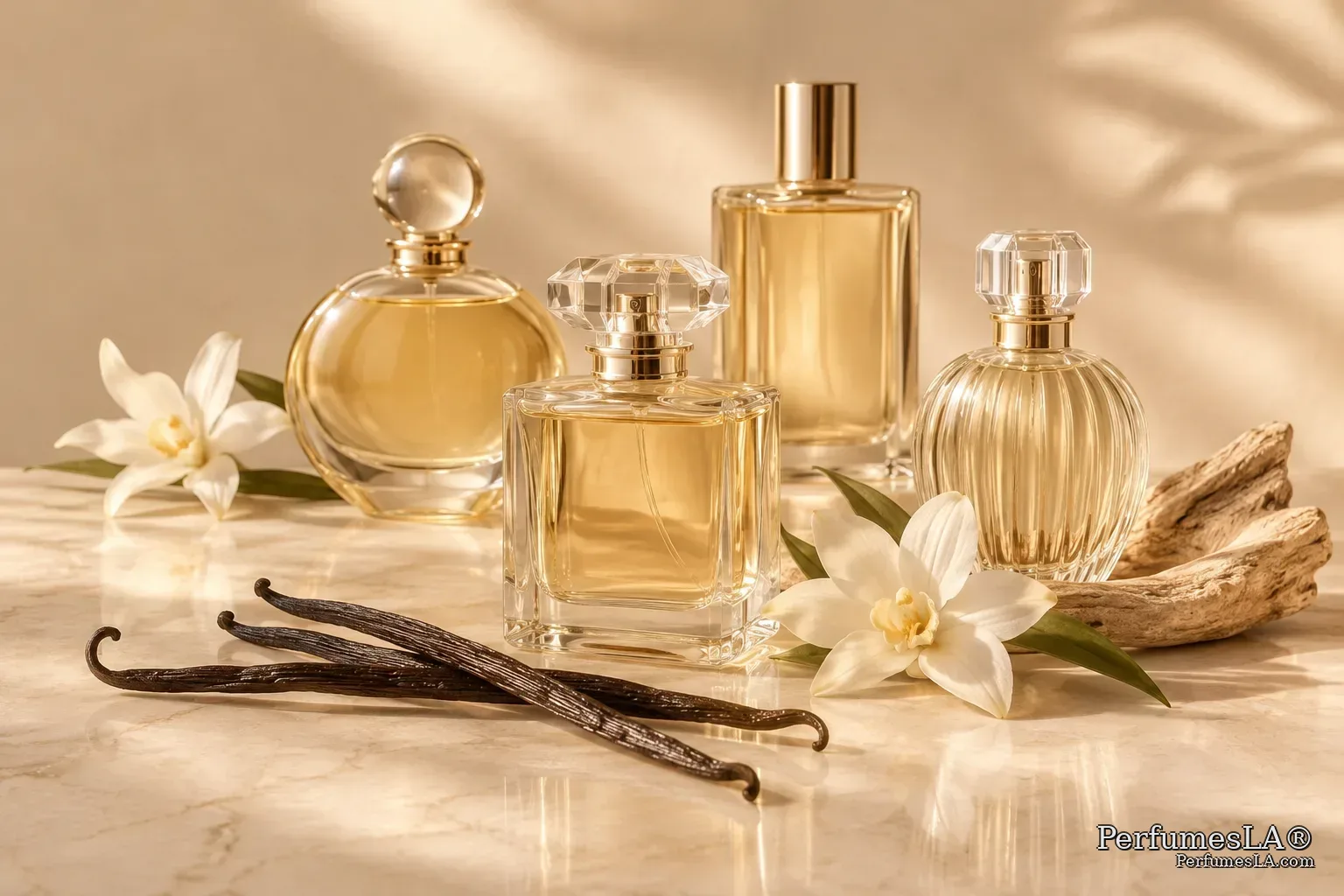
Vanilla Perfumes: A Guide to Warm and Sweet Scents
Vanilla perfumes smell warm and sweet, but they are not all dessert-like. Vanilla can suggest creamy custard, soft musk, polished woods or a floral fragrance with a sweet finish. The best choice depends on what surrounds the vanilla: jasmine can give it a floral direction, while patchouli can make the overall impression deeper and fruit notes can add brightness.
If you want vanilla to be the main attraction, start with a fragrance whose catalog description emphasizes it, such as Vanilla Fields or Vanilla Musk. If you prefer sweetness as part of a more complex composition, compare options such as La Vie Est Belle or Armani Si. A listed vanilla note does not guarantee that vanilla will dominate what you smell.
What does vanilla smell like in perfume?
Vanilla is commonly described as sweet, warm, creamy and comforting. Depending on the composition, it can seem soft and powdery, rich and syrupy, or dry and woody. It may recall baked goods, but it does not have to smell edible. A little vanilla-like sweetness can also soften floral, fruity or woody impressions without turning the whole fragrance into a gourmand.
A fragrance note is a description of what a perfume is intended to evoke; it is not necessarily a disclosure of an ingredient. An accord is a combination of scent impressions that creates a recognizable effect, such as caramel, vanilla pudding or a creamy floral blend. A perfume may use natural materials, aroma molecules or a combination to create an impression. A note list alone cannot establish the complete formula or prove that a particular natural ingredient is present.
This distinction is useful when shopping. A catalog might list vanilla alongside several other notes, but it cannot tell you exactly how prominent each will feel on your skin. Think of the list as a map of possible directions, not a recipe or a ranked account of every stage of wear.
Vanilla styles and the accords around them
Floral vanilla
Floral vanilla combines sweetness with the character of flowers such as jasmine, lily or rose. The result might feel airy, lush or creamy, depending on the balance. If plain vanilla sounds too dessert-like, a floral pairing is a useful place to start: the flowers offer another point of interest while vanilla can give the blend a softer edge.
Look for the particular flowers as well as the word vanilla. A jasmine pairing suggests a different direction from a composition that also lists lily, rose or several floral notes. Sample on skin to see whether the floral impression or the sweetness takes the lead for you.
Musky and woody vanilla
Musk and woods can move vanilla away from a purely edible impression. Musk is often described as soft or enveloping, while sandalwood and cedarwood can suggest a creamier or drier woody contrast. Patchouli may add an earthy dimension. These are descriptive tendencies, not promises: a woody vanilla can still feel quite sweet, and a musky fragrance is not necessarily subtle.
Fruity and gourmand vanilla
Fruit can make a vanilla composition feel brighter or juicier. Pear, berries, citrus and stone fruit each suggest a different kind of contrast, so a fruity vanilla is a broad category rather than a single smell. A fragrance with fruit and flowers may feel very different from one that pairs fruit with praline or caramel.
Gourmand fragrances evoke edible pleasures through impressions such as caramel, praline or crème brûlée. These names describe scent effects, not a promise that the perfume contains food. If you enjoy a dessert-like impression, look for vanilla alongside those notes. If you want less emphasis on sweetness, compare a fruit-and-floral or fruit-and-patchouli option instead.
For a broader look at how these styles relate to floral, woody and other categories, read our guide to fragrance families.
Vanilla fragrances compared
The following comparisons use the notes in our catalog descriptions. They are starting points for choosing what to sample, not guarantees of how strongly each fragrance will smell of vanilla. The descriptions do not establish the proportion of any note or provide a complete ingredient list.
- Vanilla Fields Cologne Spray by Coty: Our catalog highlights warm, rich vanilla and soft white jasmine. Consider it when you want a vanilla-and-floral pairing with a short, focused note description. Jasmine is the key contrast to compare with the musk and woods in Vanilla Musk.
- Vanilla Musk Cologne Spray by Coty: The catalog lists natural vanilla, musk, sandalwood and cedarwood. It is a relevant choice if you want vanilla paired with musk and woods rather than the jasmine highlighted for Vanilla Fields. The catalog’s note description should not be read as a complete formula.
- Angel by Thierry Mugler for Women: Our catalog lists vanilla with sandalwood and patchouli, as well as citrus, melon, peach and plum notes. Try this direction if you want to compare vanilla with both woody-earthy and fruity elements, rather than seeking a simple vanilla-and-flower combination.
- Juicy Couture by Juicy Couture for Women: The catalog lists vanilla among fruit, floral and gourmand notes, including mandarin, passion fruit, tuberose, crème brûlée and caramel, plus patchouli and woods. It is worth considering if you want several possible points of interest around vanilla, especially a floral-fruity and dessert-like mix.
- Ed Hardy by Christian Audigier for Women: Our catalog lists a vanilla pudding note alongside apple, mango, strawberry, red grapefruit, floral notes, amber, musk and tonka bean. The pudding description makes this a useful comparison for shoppers curious about a dessert-like accord within a fruit-filled composition, not necessarily a vanilla-dominant scent.
- La Vie Est Belle by Lancome for Women: The catalog lists black currant, pear, praline, tonka bean, vanilla and patchouli. Consider it for a fruit-and-gourmand direction with patchouli; compare it with Armani Si if you want to explore fruit, vanilla and patchouli with different supporting notes.
- The One by Dolce & Gabbana for Women: Our catalog lists vanilla alongside plum, bergamot, lychee, vetiver and floral notes including Madonna lily, muguet and jasmine. It is a candidate for someone who wants vanilla within a fruit-and-floral composition, rather than a note list centered on dessert accords.
- Armani Si by Giorgio Armani for Women: The catalog lists cassis, freesia, may rose, vanilla and patchouli. Its fruit, floral and patchouli combination offers a different comparison from La Vie Est Belle’s catalog-listed pear and praline, even though both descriptions include vanilla and patchouli.
How to choose between them
Start by deciding whether you want to recognize vanilla immediately or are happy for it to be one part of a larger composition. Vanilla Fields and Vanilla Musk have names and catalog descriptions that make vanilla a prominent part of the shopping proposition. Even so, only wearing them can tell you how dominant it feels to you. The other options list vanilla within a wider set of notes; that makes them relevant comparisons, but not automatically vanilla-forward fragrances.
Next, choose the contrast you enjoy. For a floral companion, compare the jasmine listed for Vanilla Fields with the broader floral and fruit notes listed for The One. For musk and woods, Vanilla Musk offers a focused catalog description. If you like the idea of fruit and patchouli, place Armani Si next to La Vie Est Belle: the latter also lists praline and tonka bean, while the former lists freesia and may rose.
For a more explicitly dessert-themed comparison, look at the catalog’s crème brûlée and caramel notes for Juicy Couture and vanilla pudding note for Ed Hardy. Both also list fruit and flowers, so neither should be assumed to smell like a single dessert. Angel provides another route: its catalog description combines vanilla with sandalwood and patchouli as well as several fruit notes.
A quick shopping checklist
- For a focused vanilla pairing: Compare Vanilla Fields’ listed jasmine with Vanilla Musk’s listed musk, sandalwood and cedarwood.
- For fruity sweetness: Look at the specific fruits, such as pear in La Vie Est Belle or lychee in The One, and consider the other notes surrounding them.
- For a dessert-like possibility: Look for catalog-listed praline, caramel, crème brûlée or vanilla pudding, while remembering that an accord is an impression.
- For a floral direction: Compare the listed flowers and decide whether you want a simple jasmine pairing or a wider fruit-and-floral description.
- For sweetness with contrast: Consider descriptions that also list patchouli, woods or musk, then sample to judge their balance.
How to sample vanilla perfume
Begin with two or three contrasting styles rather than a long list of similar names. For example, try a jasmine-and-vanilla option beside a musky-woody vanilla and a fruit-and-praline composition. This makes it easier to identify whether you prefer vanilla itself or the notes that accompany it.
Use a paper strip for an initial impression, then try a promising fragrance on clean skin. Give it time to develop before deciding: the first impression is only one part of the experience. Avoid rubbing the application area, and compare fragrances on separate areas so their scents do not overlap. If you are sensitive to fragrance, follow product directions and stop using anything that causes irritation.
Ask yourself specific questions as you wear it. Does the sweetness feel creamy, fruity or dessert-like? Can you notice the floral, musky or woody contrast you wanted? Does the balance still appeal to you later? A fragrance that sounds ideal from its note list may smell different in practice, while a less obvious choice may suit your preferences.
Performance, concentration and season
Performance varies with the formulation, your skin and the environment. Temperature, humidity, application and how accustomed your nose becomes to a scent can all affect your experience. Vanilla’s reputation for warmth does not guarantee that a particular perfume will last a certain number of hours or project at a particular distance.
Concentration names can provide context, but they are not universal measures of strength or wear time. In our catalog, Vanilla Fields and Vanilla Musk are described as cologne sprays, while several other options above are listed as eau de parfum sprays. That distinction alone cannot tell you which will feel stronger or last longer on you; compare them through wear rather than treating the label as a performance promise.
Weather and setting are also personal considerations. You might enjoy a richer-seeming sweet fragrance in cool weather and choose a fruitier or more floral contrast when it is warm. For a close shared space, start with a modest application and see how it feels. The most useful vanilla perfume is not necessarily the sweetest or the most noticeable: it is the one whose balance you enjoy wearing.